

TL;DR:
- Rapid weight loss causes skin sagging because it outpaces the skin’s ability to remodel collagen and elastin fibers, resulting in loose, crepey skin. Factors such as age, nutrition, hydration, and the speed of weight loss influence the severity of laxity, which can lead to irritation and health issues in skin folds. Managing skin health involves gradual weight loss, targeted skincare, strength training, and timing surgical interventions after weight stability.
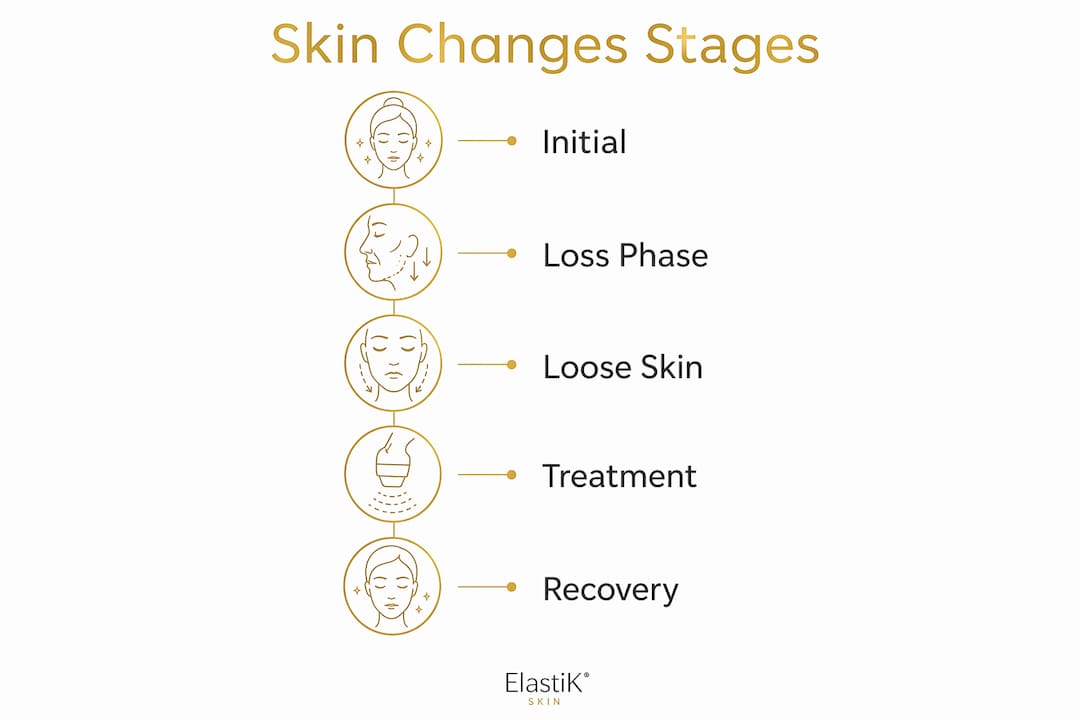
Skin changes from rapid weight loss are defined by a single biological reality: the skin cannot shrink as fast as the body loses volume. When fat disappears quickly, the collagen and elastin fibres that once held skin taut are left without their structural scaffold, producing loose, sagging, and crepey skin. GLP-1 medications such as semaglutide and tirzepatide have accelerated this pattern for hundreds of thousands of people, making the conversation more urgent than ever. Understanding what is happening beneath the surface is the first step toward managing it well.
What biological processes cause skin changes during rapid weight loss?
Skin laxity after weight loss is caused by a rate mismatch between fat loss and dermal remodelling. Subcutaneous fat acts as a physical scaffold beneath the dermis. When that volume disappears faster than fibroblasts can produce replacement collagen and elastin, the skin hangs loose rather than contracting neatly.
The dermal layer itself is also compromised during rapid loss. Fibroblasts, the cells responsible for synthesising collagen and elastin, depend on adequate protein and micronutrient supply. Caloric restriction and accelerated fat metabolism reduce those substrates, impairing the very repair mechanisms the skin needs most.
“Rapid weight loss causes simultaneous loss of the subcutaneous fat scaffold and nutritional substrate deficiency, impairing fibroblast collagen and elastin synthesis and causing structural dermal thinning.” — Creative Touch Rotherham
Several compounding factors worsen the structural picture:
- Collagen degradation accelerates under caloric stress while new synthesis slows, creating a net deficit in dermal density.
- Elevated cortisol, common during aggressive caloric restriction, further suppresses collagen production and degrades existing fibres.
- Reduced hydration thins the dermis visually, making crepey texture more pronounced on the face, neck, and arms.
- Elastin loss reduces the skin’s recoil capacity, meaning it cannot spring back even when stretched gently.
The face is often the first place people notice these effects. Dr. Michelle Henry, a board-certified dermatologist, identifies skin laxity as the primary change in rapid weight loss and recommends treating it with the same structural focus used in anti-ageing dermatology.
Which factors influence the severity of skin changes after rapid weight loss?
Not everyone who loses weight quickly experiences the same degree of loose skin. Several individual and lifestyle factors determine how severely the skin responds.
- Speed of loss. The faster the weight comes off, the less time fibroblasts have to remodel. Losing more than one kilogram per week consistently increases the risk of significant laxity.
- Age. Natural collagen production declines by roughly 1% per year after the age of 25. Older adults have less collagen reserve to draw on, so the visible impact of rapid loss is typically greater.
- Genetics and baseline skin quality. Skin thickness, elasticity, and the density of collagen fibres vary between individuals. Some people retain better recoil regardless of speed of loss.
- Hydration and protein intake. Inadequate protein and hydration worsen skin elasticity and barrier function. Protein provides the amino acids fibroblasts need; hydration maintains dermal volume and suppleness.
- GLP-1 medication use. Semaglutide and tirzepatide produce weight loss at a pace the skin struggles to follow. The speed of GLP-1-mediated loss is a key reason skin texture changes after weight loss have become so widely discussed in dermatology circles since 2023.
Pro Tip: If you are on a GLP-1 medication, start a targeted skincare routine from week one of treatment rather than waiting until laxity becomes visible. Prevention is far more effective than correction.
The amount of weight lost also matters. Losing nine stone, as I did on GLP-1 medication, produces a fundamentally different skin challenge than losing one stone. The greater the volume reduction, the larger the surface area of skin left without structural support.
What common skin issues arise from loose skin and how are they managed?
Loose skin from quick weight loss does more than alter appearance. The physical folds it creates generate a specific set of health issues from fast weight loss that are frequently underreported.
Friction, moisture, and heat trapped in skin folds create an environment that promotes rash, chafing, redness, and in some cases fungal or bacterial infection. The most commonly affected areas are:
- The lower abdomen and pannus fold
- Under the breasts
- Inner thighs
- Upper arms where skin drapes over the elbow crease
The Cadogan Clinic notes that lotions alone cannot modify the microclimate inside a skin fold. Managing irritation requires controlling both moisture and friction mechanically. Moisture-wicking fabrics, barrier creams containing zinc oxide, and gentle cleansing of fold areas twice daily are the practical foundations of fold care.
Pro Tip: Apply a thin layer of a zinc oxide barrier cream to fold areas before exercise or prolonged sitting. This reduces friction and keeps the microclimate drier, cutting the risk of rash formation significantly.
Effective post-weight-loss dermatology requires a dual-track approach: improving skin structure and managing fold inflammation at the same time. Treating one without the other leaves the problem only half resolved.
What are the effective strategies and treatments to improve skin elasticity?
Managing loose skin after dieting involves a spectrum of options, from daily skincare to surgical body contouring. The right choice depends on the degree of laxity, overall health, and whether weight has stabilised.
Topical skincare ingredients that support skin structure
Retinoids stimulate fibroblast activity and increase collagen turnover. Hyaluronic acid restores dermal hydration and plumps the appearance of crepey skin. Peptides signal collagen synthesis directly. Antioxidants such as vitamin C protect existing collagen from oxidative degradation. Dermatologists recommend retinoids and peptides specifically for facial laxity in the neck and cheek area following rapid weight loss.
Professional and procedural treatments
| Treatment | Mechanism | Best suited for |
|---|---|---|
| RF microneedling | Thermal energy stimulates collagen remodelling | Mild to moderate laxity on face and body |
| Focused ultrasound (HIFU) | Targets deep dermal and SMAS layers | Neck, jaw, and brow laxity |
| Laser resurfacing | Resurfaces epidermis and stimulates new collagen | Texture changes and superficial crepiness |
| Body-contouring surgery | Removes excess skin surgically | Significant laxity unresponsive to non-surgical care |
RF microneedling and focused ultrasound stimulate collagen production but require stable nutritional and metabolic status for best results. Attempting these procedures during active weight loss reduces their effectiveness because fibroblasts cannot respond optimally under caloric stress.
Strength training as a structural tool
Strength training maintains muscle mass beneath the skin, which reduces the visual impact of laxity by restoring some of the volume lost with fat. Two to three resistance sessions per week, focusing on compound movements, produce measurable improvement in skin appearance without any procedural intervention.
Surgical body contouring: timing is everything
Johns Hopkins Medicine stresses that body-contouring surgery should only be performed after weight has been stable for at least six to twelve months. Operating during active loss risks new sagging as the body continues to change, and can compromise wound healing.
Pro Tip: Before booking any procedural treatment, confirm your weight has been stable for at least three months and that your protein intake is consistently above 1.2 grams per kilogram of body weight. Both conditions improve treatment outcomes measurably.
How can you practically support skin health during and after rapid weight loss?
Rapid weight loss skin care tips are most effective when they address nutrition, hydration, movement, and topical care together rather than in isolation.
- Prioritise protein. Aim for at least 1.2 to 1.6 grams of protein per kilogram of body weight daily. Protein provides the amino acids fibroblasts need to synthesise collagen and elastin.
- Hydrate consistently. Drinking six to eight glasses of fluid daily maintains dermal volume and prevents the dull, crepey appearance that dehydration accelerates.
- Avoid extreme caloric restriction. If medically possible, aim for a loss rate of 0.5 to one kilogram per week. Gradual loss gives the dermis more time to remodel.
- Add resistance training. Two to three sessions per week of compound strength work rebuilds the muscular volume beneath loose skin, improving its appearance without any external treatment.
- Use targeted skincare daily. A routine built around retinoids, peptides, and multi-molecular hyaluronic acid addresses the collagen and hydration deficits that drive skin texture changes after weight loss. The GLP-1 skincare routine developed by ElastiK Skin provides a structured starting point.
- Protect skin from UV exposure. UV radiation degrades collagen at an accelerated rate. Daily SPF 30 or higher is non-negotiable during and after weight loss.
Pro Tip: Sleep is when fibroblasts are most active. Seven to nine hours of quality sleep per night is one of the most underused tools for improving skin resilience during rapid weight loss.
Key takeaways
Skin laxity after rapid weight loss is a biological inevitability, but its severity is shaped by speed of loss, nutrition, age, and the quality of care applied during and after the process.
| Point | Details |
|---|---|
| Rate mismatch drives laxity | Fat loss outpaces collagen remodelling, leaving skin without structural support. |
| Protein and hydration are non-negotiable | Both are required for fibroblast function; deficits worsen crepiness and laxity directly. |
| Fold irritation needs mechanical control | Barrier creams and moisture-wicking fabrics address the microclimate lotions alone cannot change. |
| Procedural treatments require stable weight | RF microneedling, ultrasound, and surgery all produce better outcomes after weight has stabilised. |
| Daily skincare with retinoids and peptides works | Consistent topical use of collagen-stimulating ingredients produces measurable improvement over time. |
What I have learned losing nine stone on GLP-1 medication
I lost nine stone on semaglutide. The weight came off faster than I had anticipated, and my skin did not keep pace. The laxity on my neck, abdomen, and inner arms was the part nobody warned me about, and the skincare I reached for was designed for entirely different problems.
What I found is that the timing of intervention matters more than most people realise. I started using retinoids and peptides too late, after significant laxity had already set in. Starting earlier, even before visible changes appear, gives the skin a fighting chance. I also underestimated how much protein I needed. Hitting 1.4 grams per kilogram daily made a visible difference to skin texture within eight weeks.
The other thing I would tell anyone on this path: do not rush surgical options. I know the temptation. But operating on skin that is still changing produces unpredictable results. Patience, combined with consistent daily care, resolves more than most people expect without a single procedure.
— Marc McKee
How ElastiK° Skin supports your skin through weight loss
ElastiK Skin was built specifically for this. Every product in the Skin in Evolution™ System targets the collagen, elastin, and hydration deficits that drive skin changes after rapid weight loss.
The Collagen Architect Serum delivers peptides that signal collagen synthesis directly. The Hydration Continuum Gel uses multi-molecular hyaluronic acid to restore dermal volume at multiple skin depths. The Resilience Matrix Night Cream supports barrier repair overnight, when fibroblast activity peaks. And the ElastiK° LED Mask uses clinically validated red and near-infrared light to stimulate collagen production non-invasively. These products do not treat or cure any condition. They are formulated to support skin that is working hard to keep up. Read real skin stories from people on the same path.
FAQ
Is loose skin from weight loss permanent?
Some natural tightening occurs after gradual weight loss and weight stabilisation, but significant laxity from rapid loss often requires professional treatment or surgery to resolve fully.
How long does it take for skin to tighten after weight loss?
Skin remodelling is slow. Minor laxity may improve over six to twelve months with consistent skincare and strength training, but significant loose skin rarely resolves without procedural intervention.
What ingredients actually help skin elasticity after weight loss?
Retinoids, peptides, hyaluronic acid, and antioxidants such as vitamin C are the evidence-backed ingredients for improving skin elasticity. Dermatologists recommend these specifically for laxity caused by rapid weight loss.
Can GLP-1 medications make skin changes worse?
Yes. The speed of weight loss produced by GLP-1 medications such as semaglutide increases the rate mismatch between fat loss and skin remodelling, making laxity and texture changes more pronounced than with slower, diet-only approaches.
When is the right time to consider body-contouring surgery?
Johns Hopkins Medicine advises waiting until weight has been stable for six to twelve months before pursuing body-contouring surgery, to avoid new sagging and to optimise wound healing.
0 comments