ElastiK° Skin | Skin in Evolution™
LOOSE ARM SKIN AFTER WEIGHT LOSS: WHAT ACTUALLY HELPS
By Marc McKee, Founder of ElastiK° Skin
TL;DR: THE ESSENTIAL POINTS
- Loose upper arms are a mix of three things: skin, fat and muscle. Weight loss changes all three, which is why the arms can look softer even as they get smaller.1,2
- Skin after major weight loss can be lower in collagen. One study of abdominal skin after surgical weight loss found the collagen network was depleted, while elastic fibres were not reduced.1
- Strength training is the most useful free tool you have. It helps protect muscle during weight loss, and the NHS recommends working all major muscle groups, including the arms, on at least two days a week.2,3
- Surgery is the only thing that removes excess skin. An arm lift leaves a long scar on the inner arm, complication rates are significant, and the NHS does not routinely fund it.4,5,6
- Skincare improves how the skin looks and feels. It does not tighten loose skin or remove it. Anyone who tells you otherwise is selling something.
Loose skin on the upper arms is one of the questions I get asked most.
It is the bit people notice when they reach for something, wave at someone, or catch themselves in a shop window. For a lot of people it is the first place they notice skin that has not caught up with the rest of their body.
I lost about nine stone on my own GLP-1 journey. I know how strange it feels to be proud of the weight you have lost and frustrated with your skin at the same time. Both feelings can be true.
The honest starting point.
There are three realistic tools for loose arm skin: what you put on the skin, what you do with the muscle underneath, and surgery. Each does something different. None of them does everything.
This article covers why the arms change, what strength training can and cannot do, what an arm lift involves, and where skincare fits. It applies to anyone losing weight quickly, whether through GLP-1 medicines, surgery or diet.
01. WHY THE UPPER ARMS CHANGE SHAPE
The back of the upper arm is made of skin, a layer of fat, and the triceps muscle. When you lose weight fast, all three change at once.
THE SKIN ITSELF
Skin that has been stretched for years does not simply shrink back. A study in Obesity Surgery took skin samples from 40 women having tummy-tuck surgery after bariatric weight loss and compared them with 40 women who had never been obese. The skin of the weight-loss group had less collagen, the protein that gives skin its structure. Elastic fibres were not reduced.1
That study looked at the abdomen, not the arms, and it was in people who had surgery, not GLP-1 medicines. It still helps explain why skin can feel soft and lax after big weight loss: the support network in the deeper layer has thinned.
THE FAT UNDERNEATH
Fat fills the skin out. When it goes, the skin that held it has less to drape over. This is the part people expect, and it is often the biggest visible change.
THE MUSCLE
This is the part people forget. When you lose weight, some of what you lose is lean mass, which includes muscle. A 2024 review in Diabetes, Obesity and Metabolism looked at body scans from the major trials. In a sub-study of the STEP 1 trial of semaglutide, lean mass made up about 45% of the weight lost. In the SURMOUNT-1 trial of tirzepatide, at the highest dose, it was about 26%.2
Those numbers come from different trials using different methods, so they are not a head-to-head comparison. The point is simple: some of the shape in your arms was muscle, and some of that can go too.
Loose arms are rarely only a skin problem. They are skin, fat and muscle changing at different speeds.
02. WHAT EACH OPTION CAN AND CANNOT DO
I am going to be blunt, because this category is full of overpromising.
| Option | What it can do | What it cannot do |
|---|---|---|
| Skincare | Help skin feel hydrated and more comfortable, and support the look of smoother, firmer skin | Remove excess skin or tighten a hanging fold |
| Strength training | Help protect muscle during weight loss and improve strength2. Better muscle tone changes the shape under the skin | Shrink skin that has been stretched |
| Arm lift (brachioplasty) | Remove loose skin and fat from the upper arm4 | Avoid a scar. The scar usually runs along the inner arm from elbow to armpit4 |
| Time | Let your weight settle, so you know what you are dealing with | Guarantee the skin will retract on its own |
Most people end up using more than one of these. Skincare and strength training together, and then a decision about surgery once weight has been stable for a while.
03. STRENGTH TRAINING: THE TOOL MOST PEOPLE SKIP
WHAT THE GUIDANCE SAYS
The NHS recommends that adults do strengthening activities that work all the major muscle groups, including the shoulders and arms, on at least two days a week. Its examples include lifting weights, working with resistance bands, and bodyweight exercises such as push-ups.3
WHY IT MATTERS MORE DURING WEIGHT LOSS
The 2024 review on lean mass and GLP-1 medicines says resistance exercise can help preserve muscle during weight loss and improve strength, and that higher-protein diets may protect lean mass better than lower-protein ones. It also says the ideal amount of protein for people on these medicines is not yet clear.2 How much protein you need is a question for your GP, prescriber or a dietitian.
WHAT IT WILL AND WILL NOT CHANGE
Building the triceps and shoulders gives the skin something firmer to sit over. For many people with mild to moderate looseness, that makes a visible difference to the shape of the arm.
It will not make stretched skin smaller. If you have a large fold of skin that hangs when your arm is raised, no amount of tricep dips will remove it. I would rather say that now than have you blame yourself in six months.
Start where you are.
Resistance bands, wall push-ups, or a couple of tins of beans count. If you have a health condition, joint problems or have not exercised in a long time, check with your GP before you start.
04. ARM LIFT SURGERY: WHAT IT INVOLVES
An arm lift, or brachioplasty, is surgery that reshapes the upper arms by removing loose skin and fat.4
THE SCAR
The scar usually runs along the inner arm from the elbow to the armpit, depending on the technique. One UK private hospital group describes it as permanent but usually fading over 9 to 12 months.4 That is the trade: less loose skin, in exchange for a long scar.
RECOVERY
The same provider describes general anaesthetic, one to two days in hospital, a compression garment for several weeks, around two weeks off work depending on your job, and no heavy lifting or strenuous exercise for six to eight weeks.4 Your own surgeon will give you their specific plan.
THE COMPLICATION RATES ARE REAL
An NHS commissioning policy summarising the evidence reports an overall complication rate of 28.9% across 1,065 patients, most often thickened scars, fluid collection (seroma) and bleeding under the skin (haematoma). It notes that complication rates for arm, thigh and buttock lifts are higher than for other cosmetic procedures, while a later, larger cohort of 2,294 patients found lower rates.5
A study of 56 arm lifts in people after massive weight loss found complications in half of them, with poor scarring in a quarter and revision surgery in over a third. Even so, 71.4% said they were satisfied. It was a single-centre, retrospective study, so it is a snapshot rather than the final word.6
IS IT AVAILABLE ON THE NHS?
Usually not. The policy above classes arm lifts as not routinely commissioned, available only in exceptional circumstances. The body contouring criteria it cites include a current BMI under 30 that has been stable for 12 months, with significant physical and psychological functional problems.5 Policies differ by area, so ask your GP what applies to you.
I am realistic that I may still need surgery myself one day. Good skincare does not replace that conversation. It makes sure the skin is in the best condition it can be, whatever you decide.
05. WHERE SKINCARE FITS
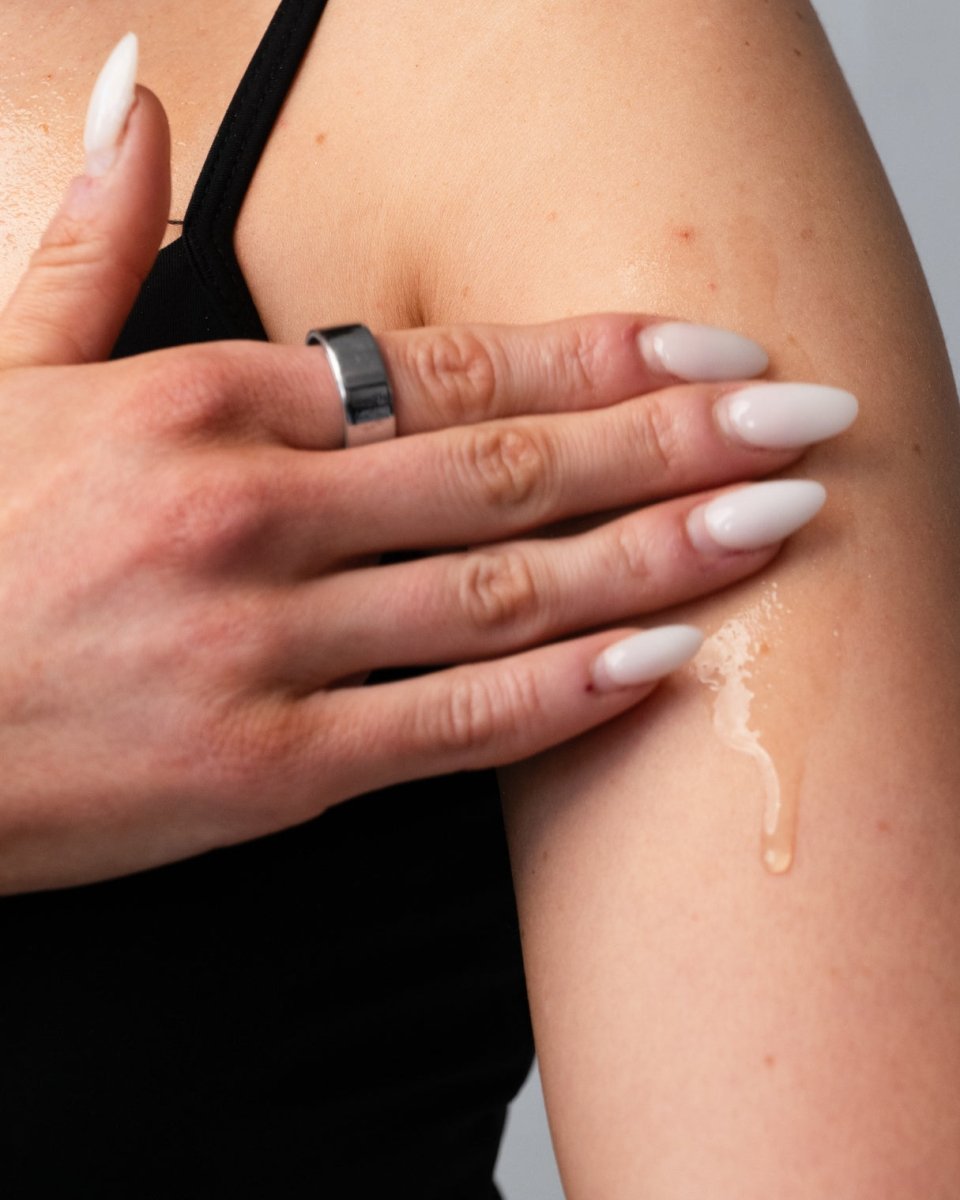
Skincare works on the surface and the way skin looks and feels. It is not going to change the amount of skin you have. What it can do is keep skin hydrated and comfortable, which matters when you are living in it every day, and support the look of smoother, firmer skin.
In our own pre-launch trial, 11 participants used the routine for six weeks. All 11 said their skin felt more hydrated, and 9 of 11 said it felt more comfortable. That is a small trial of how skin felt, not a measure of tightening. You can read how we ran it.
The arms are body skin, and most routines treat them as an afterthought. These are the steps that matter for this area.

HYDRATION CONTINUUM GEL
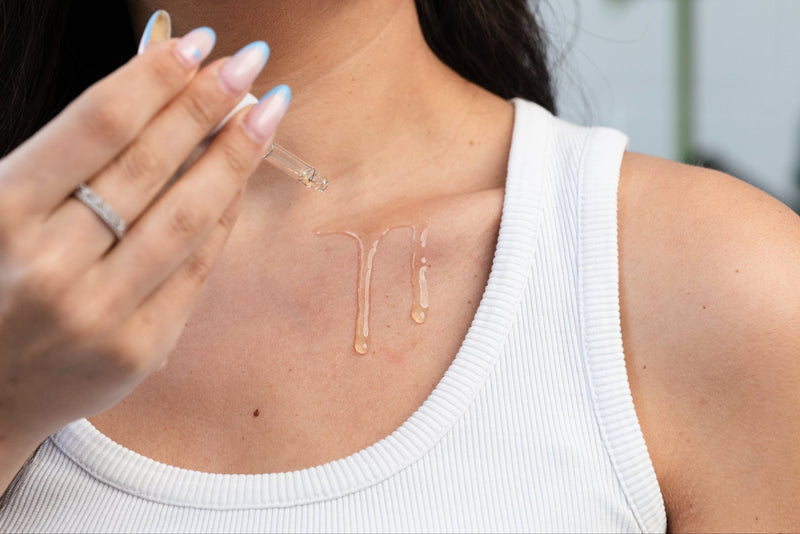
Two forms of hyaluronic acid with sodium PCA and aloe leaf juice. Straight after your morning shower, on the face, neck, décolletage and arms, while the skin is still slightly damp.
The upper arms are one of the areas this gel is made for, and one of the first places most routines forget. A light hyaluronic acid gel on slightly damp skin straight after the shower is a quick first layer that helps arm skin feel hydrated.

COLLAGEN ARCHITECT SERUM
Multi-weight hyaluronic acid and sodium PCA, made to support the look of firmer, more hydrated skin. It is designed for the arms as well as the face, neck and abdomen. It contains no peptides.
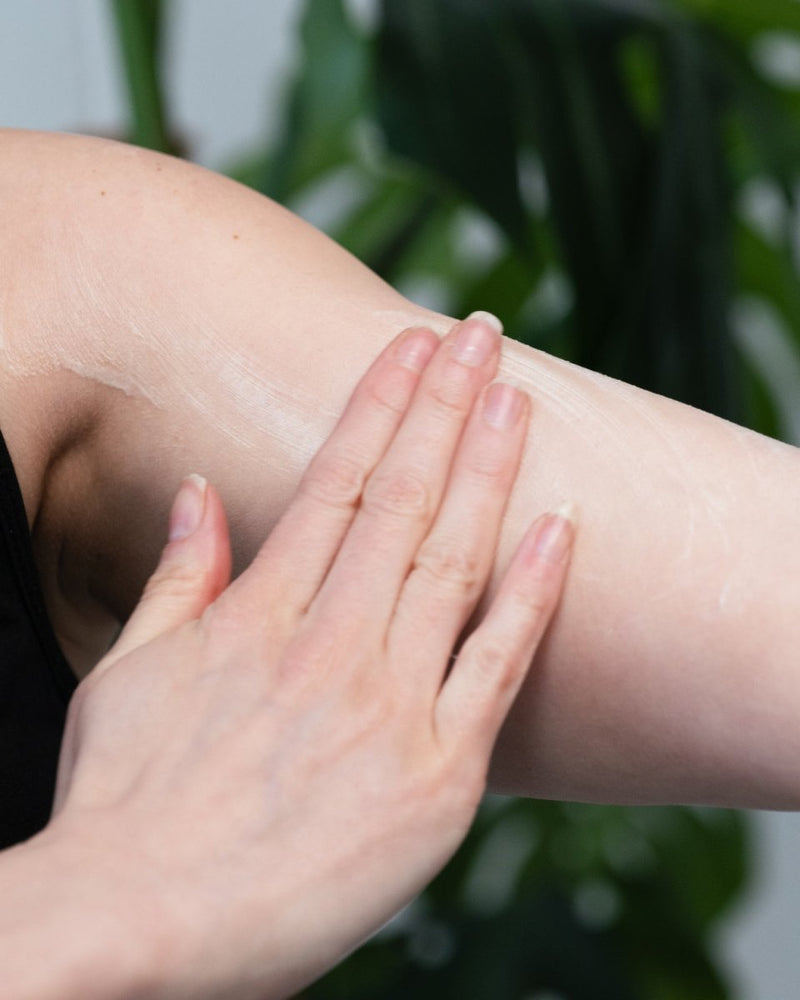
It is designed for body areas, so it goes straight onto the backs of the arms after the gel. Hyaluronic acid and sodium PCA help skin hold on to water, which supports the look of smoother skin while you build the muscle underneath. It will not shrink loose skin, and nothing in a bottle can.

REGENESIS COMPLEX
A peptide serum with hexapeptide-11, dipalmitoyl hydroxyproline and phytosterols. Use a small amount on the backs of the arms in the evening, working upwards from the elbow.
A small amount covers the back of the arm, so it is easy to add on the evenings you train. We chose hexapeptide-11 and dipalmitoyl hydroxyproline to support the look of firmer skin. It supports how skin looks; it does not tighten a hanging fold.

EVOLVE SERUM
Bakuchiol with rosehip, evening primrose and jojoba oils, straight after Regenesis Complex. Useful on arms where skin looks uneven or textured. Start on a few evenings a week and build up.
Arm skin can look uneven or slightly textured after weight loss. This oil-based serum with bakuchiol and plant oils leaves the skin feeling soft and comfortable, and it layers straight over Regenesis Complex without feeling heavy.
The habit that makes the difference.
Consistency over months matters far more than any single product. Pair your evening arm routine with something you already do, like brushing your teeth, so it does not get skipped.
06. FAQ
CAN LOOSE ARM SKIN TIGHTEN ON ITS OWN?
Some people see improvement as their weight settles and they build muscle, especially if the looseness is mild. There is no guarantee. Skin that was stretched for a long time, with a depleted collagen network, may not retract fully.1
DO TRICEP EXERCISES GET RID OF BINGO WINGS?
They help with the muscle part, and the NHS recommends working the arms as part of regular strength training.3 They will not remove excess skin. If the skin hangs in a fold when you lift your arm, exercise alone will not change that.
CAN A CREAM TIGHTEN LOOSE SKIN ON MY ARMS?
No. Skincare can help skin feel hydrated and support the look of smoother, firmer skin. It cannot tighten or remove loose skin. Be wary of any product that claims it can.
CAN I GET AN ARM LIFT ON THE NHS?
It is not routinely funded. NHS policies generally treat it as cosmetic, with funding only in exceptional circumstances and strict criteria around stable weight and BMI.5 Your GP is the place to start.
HOW LONG SHOULD I WAIT BEFORE CONSIDERING SURGERY?
Body contouring criteria cited in NHS policy include a stable weight for 12 months.5 One study of arm lifts after major weight loss suggests operating at the lowest BMI you can achieve.6 A plastic surgeon will advise on your situation.
WHAT IS THE SCAR LIKE AFTER AN ARM LIFT?
It usually runs along the inner arm from the elbow towards the armpit. It is permanent, though it usually fades over 9 to 12 months.4 Poor scarring is one of the more common complications.5,6
RELATED ARTICLES FROM THE SKIN JOURNAL
SOURCES
All sources checked in October 2026.
-
Orpheu SC, Coltro PS, Scopel GP, et al. Collagen and Elastic Content of Abdominal Skin After Surgical Weight Loss. Obesity Surgery, 2010;20:480–486.
Read the source -
Neeland IJ, Linge J, Birkenfeld AL. Changes in lean body mass with glucagon-like peptide-1-based therapies and mitigation strategies. Diabetes, Obesity and Metabolism, 2024;1–12. doi:10.1111/dom.15728.
Read the source -
NHS. Physical activity guidelines for adults aged 19 to 64. NHS website, page last reviewed 22 May 2024.
Read the source on the NHS website -
Nuffield Health. Arm reduction (brachioplasty). Nuffield Health Parkside Hospital, treatment information, 2026.
Read the source -
NHS Cheshire and Merseyside Integrated Care Board. CMICB_Clin006: Body Contouring and other excisions (Version 1). Clinical commissioning policy, ratified April 2023.
Read the source -
Marchica P, Bassetto F, Pavan C, et al. Retrospective analysis of the predictive factors associated with good surgical outcome in brachioplasty in massive weight loss patients. Journal of Plastic Surgery and Hand Surgery, 2022;56(6):326–334.
Read the source
This article is general information, not medical advice. ElastiK° products are cosmetics and support the appearance of skin; they do not treat medical conditions.