ElastiK° Skin | Skin in Evolution™
CERAMIDES EXPLAINED: THE BARRIER INGREDIENT WINTER SKIN NEEDS
By Marc McKee, Founder of ElastiK° Skin
TL;DR: THE ESSENTIAL POINTS
- Ceramides are fats that sit between your skin cells. Together with cholesterol and fatty acids, they form the lipid matrix that is crucial for a healthy skin barrier.1
- Cold, dry weather puts that barrier under pressure. Low humidity and cold weather can impair barrier function, which is why skin feels tighter and itchier in winter.2
- Ceramide moisturisers have reasonable early evidence. Small trials report better hydration and less water loss through the skin over about four weeks, though the evidence has limits.2
- Not every "ceramide" on a label is the same thing. Researchers point out that some products use ceramide mimics rather than skin-identical ceramides, and concentrations are often not disclosed.3
- How you use a moisturiser matters as much as what is in it. Apply it straight after washing, every day, even when skin feels fine.4,5
The first cold week of the year, your skin usually knows before the weather forecast does.
Tight after the shower. Itchy on the shins. A rough patch on the backs of the hands that was not there in September. If your skin is already going through a lot of change, from weight loss, menopause or a new baby, winter adds one more pressure on top.
Ceramides are the ingredient you will see on almost every barrier cream this time of year. They are worth understanding, because they are one of the few skincare buzzwords that maps onto real skin biology.
The one-line version.
Your skin barrier is held together by fats. Ceramides are one of the main ones. Winter makes that barrier work harder, and the right moisturiser, used the right way, helps it hold on to water.
This article covers what ceramides are, why winter is hard on the barrier, what the evidence says, how to tell a good barrier product from marketing, and how to use it.
01. WHAT CERAMIDES ACTUALLY ARE
THE BRICKS AND THE MORTAR
The outermost layer of your skin is often described as a brick wall. The bricks are flattened skin cells. The mortar is a mix of fats, or lipids, that fills the gaps between them.
That mortar is made of three main types of lipid: ceramides, fatty acids and cholesterol. Research on skin barrier repair describes this lipid matrix as crucial for proper barrier function.1
WHY THEY MATTER
A 2026 review in Cureus describes ceramides as key to the integrity of the skin barrier, with cholesterol and fatty acids supporting lipid production and helping the skin retain moisture.2 When this matrix is disrupted, water escapes more easily and irritants get in more easily.
The same research also notes that in inflammatory skin conditions, the make-up and arrangement of these lipids is altered, which contributes to a weaker barrier.1
THE 3:1:1 RATIO
You may see products mention a 3:1:1 ratio. This refers to ceramides, cholesterol and fatty acids, a balance that the Cureus review says is recommended by dermatological societies for barrier repair.2
Ceramides are not a trend ingredient. They are part of the structure your skin already uses to keep water in.
02. WHY WINTER HITS THE BARRIER HARDER
COLD AIR AND LOW HUMIDITY
Studies have shown that low humidity and cold, dry weather can impair skin barrier function.2 Outside, the air is cold and dry. Inside, central heating dries the air further. Your skin is losing water on both fronts.
THE HOT SHOWER PROBLEM
Winter is when everyone stands under a hot shower for longer. The British Association of Dermatologists advises bathing or showering quickly in lukewarm, not hot, water, no more than once a day, and avoiding soaps and foaming body washes, even ones that claim to be good for dry, itchy skin.6
DRY SKIN IS THE COMMONEST CAUSE OF ITCH
Dry skin is the most common cause of widespread itching without a rash, especially in people over 65.6 If you are itchy all over in winter but cannot see a rash, a dry barrier is the most likely reason.
Why changing skin feels it more.
When your body is changing fast, your skin is already adapting. A barrier that is coping in October can tip over into tightness and itch by December. That is when consistent barrier care earns its place.
03. WHAT THE EVIDENCE SAYS ABOUT CERAMIDE CREAMS
I am going to be blunt, because this category is full of overpromising.
THE ENCOURAGING PART
The 2026 Cureus review summarises two trials of ceramide moisturisers:2
- Older adults with very dry skin: in a double-blind, split-site trial, a moisturiser containing ceramides 1, 3 and 6-II improved skin hydration by 26% and reduced water loss through the skin by 15% compared with a basic hydrophilic cream over 28 days.2
- A placebo-controlled trial: a ceramide-dominant cream and cleanser significantly reduced water loss through the skin and improved hydration over 28 days.2
THE LIMITS
- The review itself was industry-supported. Medical writing was funded by a pharmaceutical company, and two of the authors work for it.2
- The trials were short. Both ran for 28 days.2
- Ceramide creams are never just ceramides. They also contain humectants and occlusives, so it is hard to know how much of the benefit comes from the ceramides alone.
- "Ceramide" can mean different things. Two skin scientists writing in The Journal of Dermatology point out that the research often confuses true ceramides with pseudoceramides, which are ceramide mimics. They add that the concentrations used in products are often not disclosed, and that the ingredient names on a label are not detailed enough for proper scientific scrutiny.3
| Ingredient type | Examples | What it does |
|---|---|---|
| Barrier lipids | Ceramides, cholesterol, fatty acids | Part of the skin's own lipid matrix that keeps the barrier intact1,2 |
| Humectants | Hyaluronic acid, glycerin, sodium PCA | Draw water into the outer layer of skin |
| Emollients and occlusives | Plant butters, oils, waxes | Form a protective layer that keeps moisture in4 |
The honest summary: ceramides make sense biologically, the early trial evidence is encouraging, and a good barrier cream combines all three of the types above. A cream with ceramides on the label is not automatically better than a well-made cream without them.
04. HOW TO USE A BARRIER CREAM PROPERLY
This is the part most people skip, and it costs nothing.
THE NHS AND DERMATOLOGIST ADVICE
- Apply straight after washing. The NHS advises applying an emollient as soon as you have patted your skin dry.4
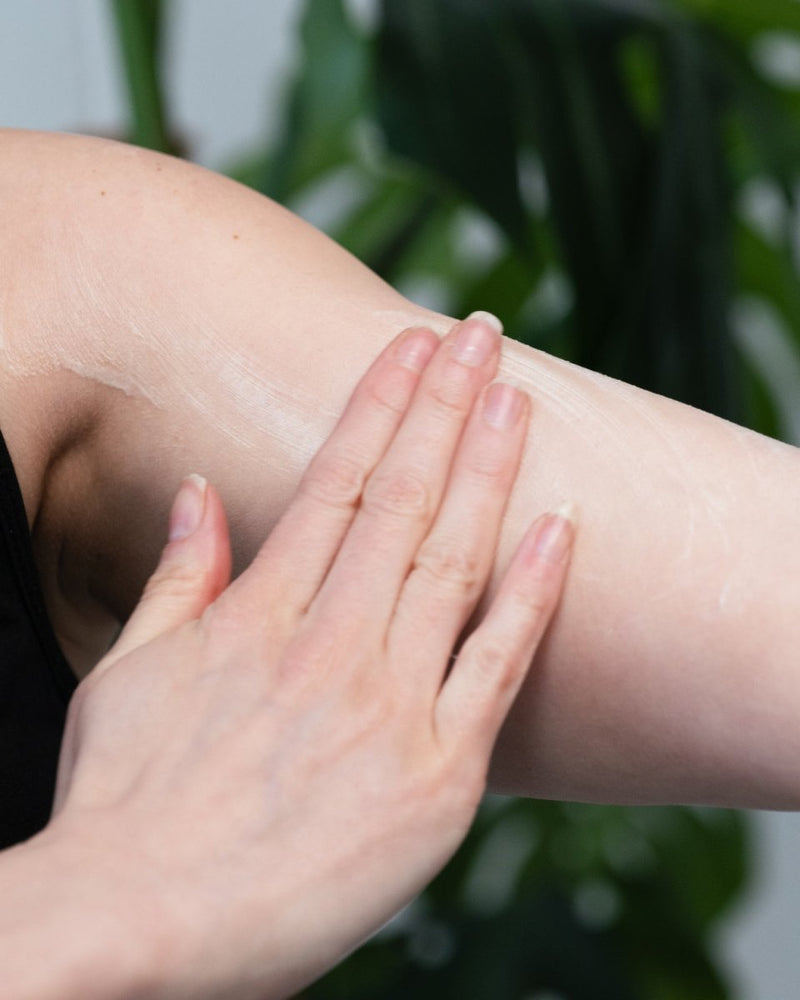
- Smooth it, do not rub it. Apply gently in the direction your hair grows, which helps avoid irritating the hair follicles.4,5
- Use it every day. Dermatologists advise using emollients daily, even when your skin is not causing problems.5
- Thicker for night. Creams suit daytime because they are less greasy. Richer ointments suit very dry skin and night-time use.4
- Choose unperfumed when itchy. The NHS suggests an unperfumed moisturiser or emollient for itchy skin, and avoiding long baths or showers and perfumed soaps.7
A safety point worth knowing.
Emollient residue on clothing and bedding can make them catch fire more easily, whether the product contains paraffin or not. Keep away from naked flames and cigarettes, and wash clothes and bedding regularly.4,5
05. WHERE OUR NIGHT CREAM FITS
I want to be precise here, because this is exactly the area where brands blur the line.
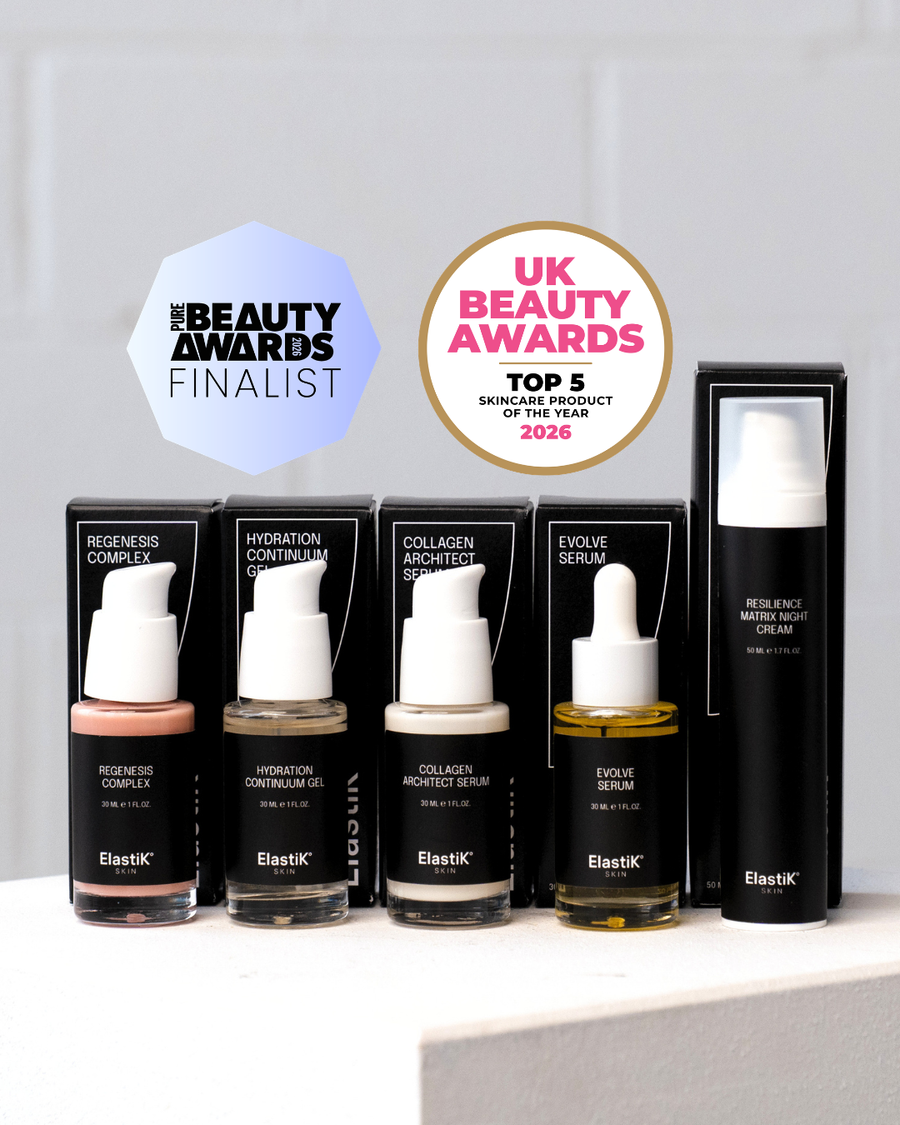
The ingredient list of Resilience Matrix Night Cream does not include a ceramide by its ingredient name, so we do not call it a ceramide cream. What it does contain are plant glycosphingolipids, which belong to the sphingolipid family, the same broad family of lipids that ceramides belong to. It also contains glycolipids, and palmitic and stearic acids, which are fatty acids. Around them sit shea butter, cocoa butter, jojoba and sunflower oils, olive oil unsaponifiables and sunflower wax for richness, and glycerin, sodium PCA and sodium hyaluronate as humectants.
We chose that combination because it covers all three jobs in the table above. The trials in section 03 were on other products, so I am not claiming our cream does what they found. What I can tell you is what our own pre-launch trial found: 11 participants used the routine for six weeks, all 11 said their skin felt more hydrated, and 9 of 11 said it felt more comfortable. You can read how we ran it.

HYDRATION CONTINUUM GEL
The humectant layer. Two forms of hyaluronic acid with sodium PCA and aloe, applied straight after your morning shower to slightly damp skin on the face, neck, décolletage and arms.
Winter skin needs water in first and something to hold it there. The NHS advises applying moisturising products as soon as you have patted your skin dry,4 and this gel is designed for exactly that moment after your morning shower, before central heating starts drying the air.

RESILIENCE MATRIX NIGHT CREAM
The barrier layer. Shea and cocoa butter with plant glycosphingolipids and fatty acids, applied to the face, neck and décolletage as you get into bed, as the last step of the evening.
Cold, dry air and low humidity can impair the barrier.2 This is the richest step in the routine: shea and cocoa butter and plant oils to hold moisture in overnight, with plant glycosphingolipids and fatty acids from the same broad lipid families as the skin's own barrier. It is not a ceramide cream, and we do not call it one.
Water in first, then something to hold it there. That is the whole logic of a winter barrier routine.
06. FAQ
WHAT DO CERAMIDES DO FOR YOUR SKIN?
They are one of the main fats in the outer layer of skin. With cholesterol and fatty acids, they form the lipid matrix that keeps the barrier working, holding water in and keeping irritants out.1,2
ARE CERAMIDES GOOD FOR DRY SKIN IN WINTER?
They make sense for it. Cold, dry weather can impair the barrier, and small trials of ceramide moisturisers report better hydration and lower water loss over four weeks.2 How often and when you apply matters as much as the ingredient.4,5
ARE PLANT CERAMIDES THE SAME AS THE ONES IN MY SKIN?
Not necessarily. Researchers have pointed out that some products labelled as containing skin lipids use molecules that are not skin-identical ceramides, and that concentrations are often not disclosed.3 That does not make them useless. It means you should be wary of products that oversell them.
CERAMIDES OR HYALURONIC ACID: WHICH IS BETTER?
They do different jobs. Hyaluronic acid is a humectant that draws water into the skin. Ceramides are barrier lipids that help keep it there. In winter, most dry skin benefits from both.
HOW LONG DO CERAMIDE CREAMS TAKE TO WORK?
The trials summarised above measured changes over 28 days.2 Give any barrier routine at least four weeks before judging it.
WHEN SHOULD I SEE A GP ABOUT DRY, ITCHY SKIN?
The NHS suggests seeing a GP if the itch is affecting your daily life, does not improve with self-care, keeps coming back, is all over your body, or is severe.7 A pharmacist can also advise on products.7
RELATED ARTICLES FROM THE SKIN JOURNAL
SOURCES
All sources checked in October 2026.
-
Berkers T. A novel formulation for skin barrier repair: from ex vivo assessment towards clinical studies. PhD thesis, Leiden Academic Centre for Drug Research, Leiden University, 2018.
Read the source -
De A, Sarveswari K, Tolat S, Hameed S, Bhat S, Jain S, Swami OC. Oryza Ceramax in Dermatologic Care: A Multi-pathway Approach to Skin Hydration and Barrier Repair. Cureus, 2026;18(1):e100886.
Read the source -
Lane M, Rawlings AV. Comment on "Clinical significance of the water retention and barrier function-improving capabilities of ceramide-containing formulations: A qualitative review". The Journal of Dermatology, 2022;49(3):e121–e123. doi:10.1111/1346-8138.16262.
Read the source -
NHS. Emollients. NHS website, page last reviewed 24 October 2023.
Read the source on the NHS website -
British Association of Dermatologists and British Society for Paediatric and Adolescent Dermatology. Emollient use in skin conditions: patient information leaflet. Skin Health Info, updated October 2026.
Read the source -
British Association of Dermatologists. Pruritus (itching): patient information leaflet. Skin Health Info, updated December 2025.
Read the source -
NHS. Itchy skin. NHS website, page last reviewed 19 July 2023.
Read the source on the NHS website
This article is general information, not medical advice. ElastiK° products are cosmetics and support the appearance of skin; they do not treat medical conditions.