ElastiK° Skin | Skin in Evolution™
WHY WINTER HITS CHANGING SKIN HARDER (AND HOW TO ADJUST YOUR ROUTINE)
By Marc McKee, Founder of ElastiK° Skin
TL;DR: THE ESSENTIAL POINTS
- Cold, dry air is hard on skin. The NHS notes that dry environments and cold climates can make some skin conditions worse, and that very dry skin cannot provide an effective barrier.1
- Skin that is already changing feels it first. Dry and itchy skin is a recognised symptom of perimenopause and menopause, and sickness or diarrhoea on a GLP-1 can leave you dehydrated.2,3,4
- Your shower matters more than your serum. Shorter, warm rather than hot showers and fewer harsh soaps make a real difference.5,6
- Timing is everything with moisturiser. The NHS says emollients work best applied straight after washing, once skin is patted dry.7
- Swap, do not overhaul. A richer cream at night, a gentler wash and a few habit changes are usually enough.
The clocks go back this weekend, and for a lot of us the heating goes on with them.
Every year, the messages from our community change around now. Skin that felt fine in September starts to feel tight after a shower. Shins and arms get itchy. Hands crack. Faces go red when people come in from the cold.
For anyone whose skin is already going through change, whether that is weight loss, perimenopause and menopause, or the months after having a baby, winter tends to make every existing problem a bit more obvious.
The good news.
Most winter skin problems respond to small, boring changes. The difference is usually in your habits, not in buying more products.
This article covers why winter is hard on skin, why changing skin struggles more, and the specific swaps worth making now.
01. WHY WINTER IS HARD ON SKIN
DRY AIR, INSIDE AND OUT
The outer layer of skin acts as a barrier, holding water in and keeping irritants out. The NHS explains that when skin is very dry it cannot provide an effective barrier, and that dry environments and cold climates can make discoid eczema worse.1 You do not need a skin condition to notice the same pattern: tight, flaky, itchy skin that gets worse as the weather turns.
TEMPERATURE SWINGS
Going from a cold street into a warm room, or from a hot shower into a cold bedroom, is hard on reactive skin. The NHS lists heat and changes in temperature as triggers for eczema flare-ups, and hot or cold temperatures as triggers for rosacea.8,9
HOTTER, LONGER SHOWERS
It is natural to want a long, hot shower on a cold morning. NHS self-care advice for dry skin is to limit bath time, use warm water and avoid harsh, drying soaps.5 For itchy skin, the NHS suggests cool or lukewarm baths and showers.6
Winter skin damage is rarely one big thing. It is ten minutes too long in a shower that is too hot, every day, for three months.
02. WHY CHANGING SKIN FEELS IT MORE
PERIMENOPAUSE AND MENOPAUSE
The NHS lists dry and itchy skin among the symptoms of perimenopause and menopause.2 A UK dermatologist's review explains that oestrogen helps the outer layer of skin hold water, so as levels fall, skin holds less.10 In one study included in a 2026 systematic review, 78% of 150 postmenopausal women had dry skin.11 Add winter air and hot showers, and it is no surprise that many women in our community say their itching is worse in the colder months. We cover this in Perimenopause Skin: The Early Signs Nobody Warns You About.
GLP-1 AND OTHER WEIGHT LOSS
Feeling or being sick, diarrhoea and constipation are common side effects of semaglutide.3 The NHS notes that being sick or having diarrhoea makes dehydration more likely, and that a dry mouth, lips and tongue are among the signs.4 If you feel sick, the NHS suggests starting with small sips and gradually drinking more, and a pharmacist can recommend rehydration solutions.4 If sickness or diarrhoea carries on, speak to your prescriber.
Drinking more water will not fix dry skin on its own. But being dehydrated on top of winter air and a changing body does not help. We go into GLP-1 dryness in GLP-1 Skin Problems: Why Your Skin Is Dry, Rough and Dull.
AFTER PREGNANCY
New parents in our community often say their skincare routine disappeared overnight. Winter is a good moment to bring back the two habits that matter most: moisturising after washing and protecting your skin from the cold. Our postpartum skincare guide covers the rest.
03. THE WINTER SWAPS THAT MAKE A DIFFERENCE
I am going to be blunt, because this category is full of overpromising. You do not need a separate winter range. You need to change a few habits and maybe one product.
| Summer habit | Winter swap | Why |
|---|---|---|
| Long, hot shower | Shorter, warm (not hot) shower | NHS dry skin advice is to limit bath time and use warm water5 |
| Foaming shower gel | A gentle, unperfumed wash, or an emollient instead of soap | Soaps and shower gels can irritate dry skin1,8 |
| Moisturise when you remember | Moisturise as soon as you have patted dry | Emollients are best applied straight after washing7 |
| Light lotion morning and night | Keep the light layer for the day, switch to a richer cream at night | Creams suit daytime; richer, greasier products suit very dry skin and night-time7 |
| Rubbing cream in hard | Smooth it on in the direction of hair growth | NHS guidance is to smooth, not rub5,7 |
| Bare face on a cold walk | Scarf over the lower face in cold wind | NHS rosacea advice is to cover your face in cold weather9 |
DO NOT FORGET SUNSCREEN
UK sun is strongest from March to October, but the NHS also points out that you can burn even when it is cloudy, and suggests considering protection whenever the UV index is 3 or higher.12 Check the forecast, and keep SPF on your face on bright days.
HANDS, LIPS AND SHINS
These are often the first places to crack. Keep a moisturiser by the sink and reapply after every hand wash, as moisturisers are best applied after washing.5 Shins and forearms are easy to forget, so give them the same attention as your face after a shower.
A safety note people do not expect.
The NHS warns that clothing, bedding and dressings that have been in contact with emollients can catch fire easily, whether the product contains paraffin or not. Keep away from fire, flames and cigarettes. Washing fabrics at a high temperature reduces the build-up but does not remove it completely.7
04. WHEN DRY SKIN NEEDS MORE THAN A MOISTURISER
NHS self-care advice is to see your GP if dry skin is red or inflamed, if dryness and itching interfere with sleep, if you have open sores or infection from scratching, or if large areas are scaling or peeling.5 The NHS also suggests seeing a GP if itching is all over your body, severe, or not getting better with self-care.6
Your pharmacist is a good first stop too. They can recommend emollients and tell you when something needs a doctor.
05. YOUR WINTER SKIN IN EVOLUTION™ ROUTINE
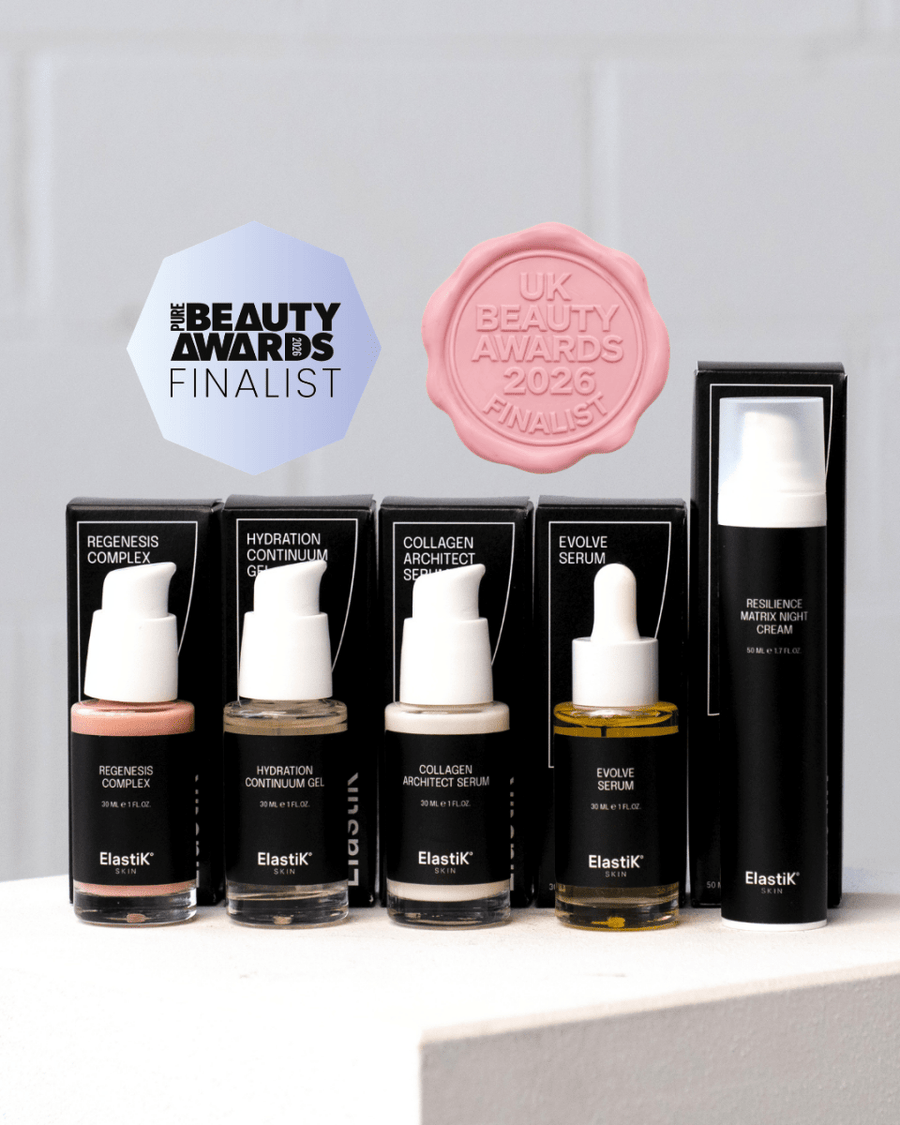
The Skin in Evolution™ System was made for skin going through rapid change: GLP-1 and other weight loss, perimenopause and menopause, and after pregnancy. In winter, the hydration and barrier steps do the heavy lifting.

HYDRATION CONTINUUM GEL
Two forms of hyaluronic acid with sodium PCA and aloe. Apply straight after your morning shower, as soon as you have patted dry, on the face, neck, décolletage and arms.
The NHS advice is to moisturise as soon as you have patted dry after washing.7 A light gel kept in the bathroom makes that the easiest step of the morning, before the cold and the heating get to your skin.

PEPTIDE SOLSTICE DAY CREAM
A lightweight peptide moisturiser with jojoba oil and mango seed butter, for the face and neck each morning after your serums. Follow with SPF on bright days.
Creams suit daytime skin.7 If a gel alone leaves your face feeling tight by lunchtime once the heating is on, this adds a cream layer without the weight of a night cream.

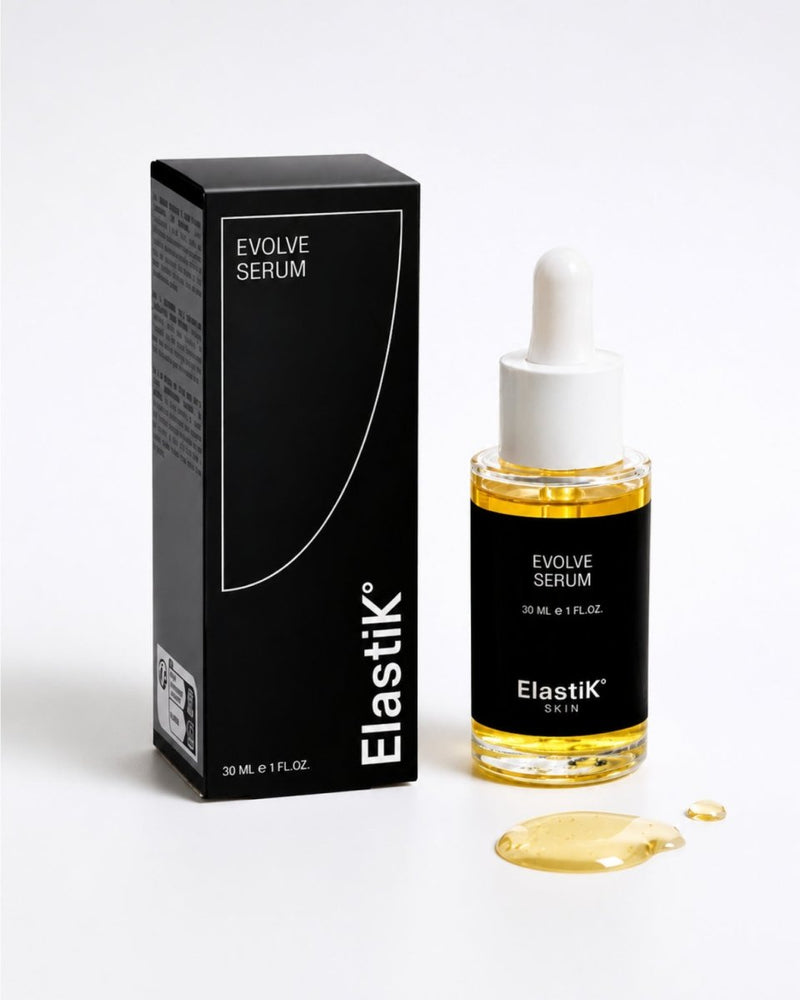
EVOLVE SERUM
An oil-based serum with bakuchiol, rosehip, evening primrose and jojoba, for anywhere skin looks dull, uneven or textured, including the arms and legs.
Winter shins and forearms often look dull and rough. An oil-based evening serum gives them some attention too. If your skin is reactive in the cold, use it on fewer evenings until it settles.

RESILIENCE MATRIX NIGHT CREAM
A rich cream with shea and cocoa butter and plant glycosphingolipids, applied as you get into bed on the face, neck and décolletage.
This is the main winter swap. NHS guidance is that richer products suit very dry skin and night-time,7 and this is the richest step in the routine.
One thing to know if your skin is very itchy or reactive: our products contain fragrance from natural essential oils, and the NHS advice for itchy skin is to use unperfumed products.6 Patch test first, or stick to an unperfumed emollient until your skin settles.
In our small pre-launch trial, 11 people used the routine for six weeks. All 11 said their skin felt more hydrated, and 9 of 11 said it felt more comfortable. The full details are on our evidence page.
06. FAQ
WHY IS MY SKIN SO DRY IN WINTER?
The NHS notes that dry environments and cold climates can make dry skin conditions worse, and that very dry skin cannot provide an effective barrier.1 Long, hot showers and harsh soaps add to it.5
WHAT IS THE BEST WAY TO MOISTURISE IN WINTER?
Straight after washing, once you have patted dry, smoothed on rather than rubbed. A lighter cream in the day and a richer one at night works well for most people.7
SHOULD I STILL WEAR SUNSCREEN IN WINTER?
UK sun is strongest from March to October, but you can still burn when it is cloudy.12 Check the UV index, and use SPF on bright days and whenever you are outside for long.
WHY IS MY SKIN ITCHY IN WINTER?
Itch usually goes hand in hand with dryness. Cooler showers, unperfumed moisturiser and soft clothing often help.6 If the itch is severe, all over your body or keeping you awake, see your GP.5,6
DOES DRINKING MORE WATER HELP DRY SKIN?
Not on its own. Dry skin is mostly about the barrier and what you put on it. Staying hydrated still matters for your health, especially if you are being sick on a GLP-1.4
IS MENOPAUSE SKIN WORSE IN WINTER?
Many women find it is. Menopause skin already holds less water, and winter conditions add to that.10 A barrier-first routine and cooler showers make the biggest difference.
RELATED ARTICLES FROM THE SKIN JOURNAL
SOURCES
All sources checked in October 2026.
-
NHS. Discoid eczema. nhs.uk, page last reviewed 23 March 2023.
Read the source on the NHS website -
NHS. Symptoms of menopause and perimenopause. nhs.uk, page last reviewed 19 May 2026.
Read the source on the NHS website -
NHS. Semaglutide. nhs.uk, Medicines A to Z, page last reviewed 15 May 2026.
Read the source on the NHS website -
NHS. Dehydration. nhs.uk, page last reviewed 1 May 2026.
Read the source on the NHS website -
NHS South West London Integrated Medicines Optimisation Committee. Self Care Information for Patients: Managing Your Mild Dry Skin (v1.1). Approved November 2021.
Read the source -
NHS. Itchy skin. nhs.uk, page last reviewed 19 July 2023.
Read the source on the NHS website -
NHS. Emollients. nhs.uk, page last reviewed 24 October 2023.
Read the source on the NHS website -
NHS. Atopic eczema. nhs.uk, page last reviewed 6 September 2024.
Read the source on the NHS website -
NHS. Rosacea. nhs.uk, page last reviewed 17 March 2023.
Read the source on the NHS website -
DeGiovanni C. Managing Menopausal Skin: A Clinician's Review. EMJ Dermatology, 2025;13(1):90–94.
Read the source on EMJ -
Roster K, Fleshner L, Karatas TB, et al. Menopause and Common Dermatoses: A Systematic Review. American Journal of Clinical Dermatology, 2026;27:67–84.
Read the source -
NHS. Sunscreen and sun safety. nhs.uk, page last reviewed 24 March 2026.
Read the source on the NHS website
This article is general information, not medical advice. ElastiK° products are cosmetics and support the appearance of skin; they do not treat medical conditions.