ElastiK° Skin | Skin in Evolution™
PERIMENOPAUSE SKIN: THE EARLY SIGNS NOBODY WARNS YOU ABOUT
By Marc McKee, Founder of ElastiK° Skin
TL;DR: THE ESSENTIAL POINTS
- Perimenopause starts before your periods stop. It is the stage when periods become irregular. Menopause itself is 12 months without a period, usually in your mid-40s to mid-50s.1
- Skin is part of it. The NHS lists dry and itchy skin among the symptoms of perimenopause and menopause.2
- The early signs are easy to miss. Dryness that your usual moisturiser does not fix, new sensitivity, itch, breakouts and changes in texture are all recognised.3,4
- If you are over 45, you do not usually need a blood test. NICE guidance is that perimenopause can be diagnosed from your symptoms and changes to your periods.5
- Go gentler, not stronger. A barrier-first routine with daily sunscreen does more for changing skin than piling on actives.
Your periods are still coming. Your skin seems to have moved on without you.
It is one of the most common things women in our community describe. Nobody has mentioned the word perimenopause yet. But the moisturiser they have used for years is suddenly not enough, their face stings after cleansing, or they have spots for the first time since school.
Most of the conversation about menopause skin focuses on what happens after periods stop. The changes often start earlier, and because nobody warns you, it is easy to blame your products, your diet or yourself.
This is for anyone whose skin is changing.
Some women in our community are in perimenopause and taking a GLP-1 medicine. Many are not. The advice below applies either way.
This article covers what perimenopause is, the skin signs that often come first, why they happen, and what to change in your routine. It also covers when to talk to your GP.
01. WHAT PERIMENOPAUSE ACTUALLY IS
The NHS defines perimenopause as the time when your periods become irregular, and menopause as not having had a period for 12 months.1 It usually happens between your mid-40s and mid-50s, but it can be earlier. Early menopause can happen before 45.1
One of the first signs is usually a change to your periods. Symptoms usually last 7 to 9 years, sometimes longer, and they can change along the way.2
YOU MAY NOT NEED A TEST
For otherwise healthy women over 45, the NICE guideline is that perimenopause can be diagnosed from symptoms such as hot flushes and irregular periods, without blood tests.5 If you are younger, or the picture is less clear, your GP may want to look into it further.
Perimenopause is not a single moment. It is a long, uneven stretch, and your skin can feel it well before your periods stop.
02. THE EARLY SKIN SIGNS
The Menopause Charity lists more than 34 symptoms and is clear that everyone's experience is different.3 These are the skin changes women in our community describe most often, and what the evidence says about each one.
1. DRYNESS THAT YOUR MOISTURISER DOES NOT FIX
Skin that used to be fine, or even oily, starts to feel tight by lunchtime. The Menopause Charity describes changes in skin moisture that lead to dryness or itchiness.3 A UK dermatologist's review explains why: oestrogen helps the outer layer of skin hold water, so as levels fall, skin holds less.6
2. ITCH, OFTEN WITHOUT A RASH
Itchy skin is common around menopause, usually alongside dryness.4,7 In one study included in a 2026 systematic review, 46% of 150 postmenopausal women had itchy skin and 78% had dry skin.8 That is a single study, but it shows how common it is.
3. SKIN THAT SUDDENLY STINGS
Products you have used for years start to sting or leave you red. The Menopause Charity includes sensitivity among the skin changes of perimenopause and menopause, alongside dryness.3 It is a sign to simplify, not to add more.
4. BREAKOUTS IN YOUR FORTIES
This one surprises people most. The Menopause Charity notes that changes in skin oils during perimenopause and menopause can lead to acne.3 A dermatology review links menopausal acne to the changing balance between oestrogen and androgens.4 If it is persistent or painful, see your GP or a pharmacist, as there are effective treatments.
5. TEXTURE CHANGES ON THE NECK AND CHEST
Some women notice a finer, crepey texture on the neck and chest. The same review describes changes to elastin with menopause, which show up as slacker skin and more wrinkling.4
6. HAIR THINNING
Not skin, but it often arrives at the same time. The NHS lists hair thinning or hair loss among perimenopause and menopause symptoms.2 It is worth mentioning to your GP alongside everything else.
| Early sign | Why it happens | First thing to try |
|---|---|---|
| Dry, tight skin | Skin holds less water as oestrogen falls6 | Moisturise straight after washing, and switch to a richer cream at night |
| Itch | Usually linked to dryness4 | Unperfumed moisturiser, cooler showers, soft clothing7 |
| Stinging and redness | A recognised change, often alongside dryness3 | Strip the routine back. Pause strong acids and retinoids, then reintroduce slowly |
| Breakouts | Shifting hormone balance and skin oils3,4 | Gentle cleansing. If it persists, see a GP or pharmacist |
| Crepey neck and chest | Changes to collagen and elastin4,6 | Daily sunscreen on the neck and chest, plus hydration and barrier care |
03. WHY IT CAN FEEL SO SUDDEN
Periods change and eventually stop because hormone levels fall.1 Skin responds to oestrogen in several ways, from holding water to keeping up collagen.6
The collagen loss linked to menopause is more closely tied to how long oestrogen has been low than to your age.6 Most of it is estimated to happen in the first five years after menopause.4,6 That is why the habits you build now matter. We explain the collagen side in detail in Menopause Skin Changes: What Happens to Collagen, and What Helps.
The practical point.
Perimenopause is a good time to build habits, not to panic. A healthy barrier and daily sun protection now mean your skin goes into menopause in better condition.
04. WHAT TO CHANGE IN YOUR ROUTINE
I am going to be blunt, because this category is full of overpromising. There is no perimenopause cream that switches these changes off. What helps is a simpler, gentler routine done consistently.
STRIP IT BACK FIRST
If your skin is stinging, stop everything that is not essential for two weeks: strong exfoliating acids, scrubs, high-strength retinoids and anything heavily fragranced. The NHS advises avoiding perfumed soaps and moisturisers if your skin is itchy.7 Then add things back one at a time.
One thing to know if your skin is very itchy or reactive: our products contain fragrance, and the NHS advice for itchy skin is to use unperfumed products.7 Patch test first, or stick to an unperfumed emollient until your skin settles.
MOISTURISE AT THE RIGHT MOMENT
The NHS says emollients are best applied after washing or showering, as soon as you have patted your skin dry, smoothed in rather than rubbed.9 Creams suit the daytime and richer, greasier products suit very dry skin and night-time.9
KEEP SHOWERS COOLER
For itchy skin, the NHS suggests cool or lukewarm baths and showers and loose cotton or silk clothing.7
SUNSCREEN EVERY DAY
Use at least SPF 30 with at least 4-star UVA on all exposed skin, including your face, neck and ears. You can burn in the UK even when it is cloudy.10
BRING ACTIVES BACK SLOWLY
Once your skin has settled, a retinoid or a gentler alternative such as bakuchiol can come back in, a few evenings a week to start. You can read how they compare in Bakuchiol vs Retinol.
The System: Topical Skincare · ElastiK° Skin
05. WHEN TO TALK TO YOUR GP
Skin changes on their own are rarely the reason women book an appointment. But they are often part of a bigger picture: sleep, mood, periods, hot flushes, joint aches. It is worth taking the whole list.
The NHS suggests talking to a doctor, nurse or pharmacist about HRT and the other options available.11 It also notes that there is very little evidence on how well herbal remedies work, or how safe they are.11 HRT is a medical decision made with your GP, based on your symptoms and your own risks. It is not a skincare product.
IF YOU ALSO TAKE A WEIGHT-LOSS MEDICINE
The British Menopause Society has published guidance for clinicians on HRT alongside semaglutide or tirzepatide, because these medicines slow stomach emptying and may affect how well oral progestogen is absorbed.12 Tell your prescriber about both. Our article on HRT and GLP-1 together goes into more detail.
See a GP sooner if:
itching is severe, all over your body, affecting your daily life or not getting better with self-care.7 The same goes for acne that is painful or leaving marks.
06. A GENTLE ROUTINE FOR PERIMENOPAUSE SKIN
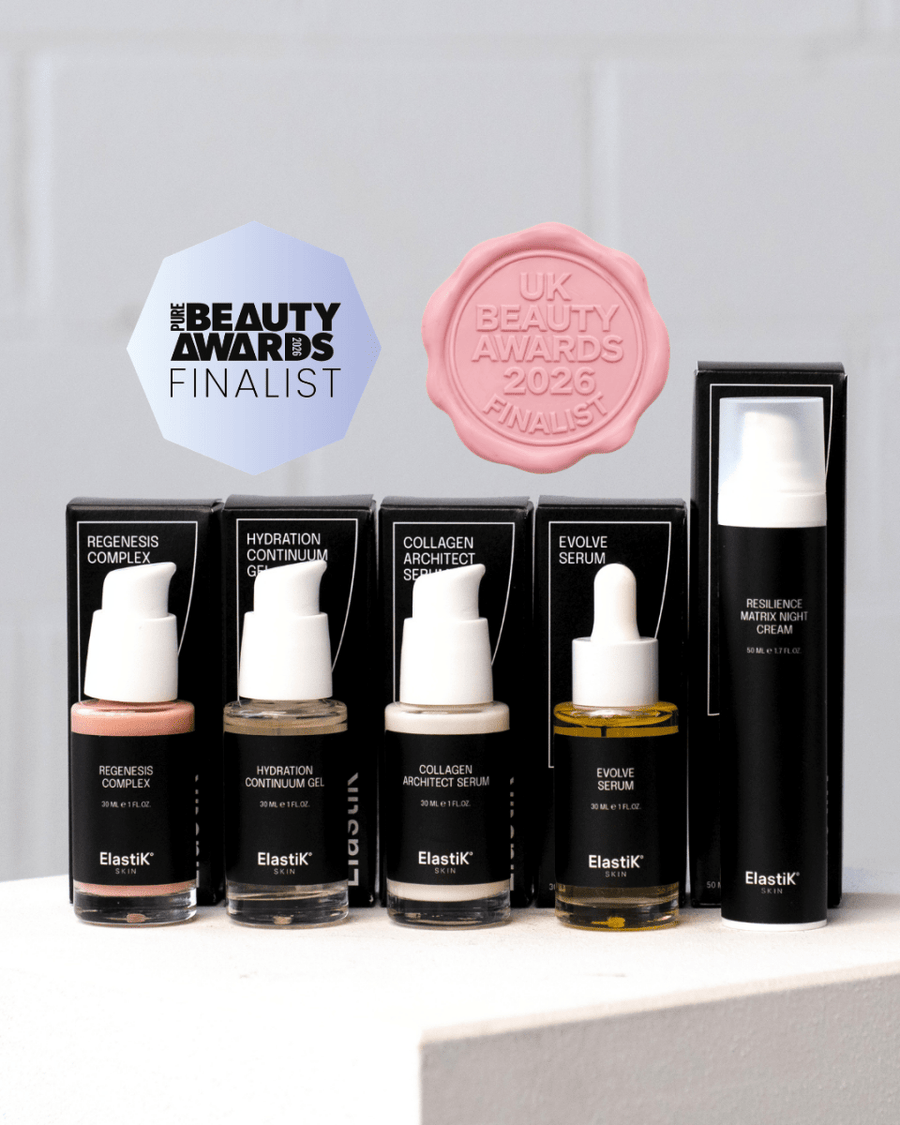
The Skin in Evolution™ System was made for skin going through rapid change, including perimenopause and menopause. For early perimenopause skin, these are the steps that matter most.

HYDRATION CONTINUUM GEL
Two forms of hyaluronic acid with sodium PCA and aloe, straight after your morning shower on the face, neck, décolletage and arms. Follow with your SPF.
Dryness your usual moisturiser no longer fixes is one of the first changes many women notice.3,6 A light hyaluronic acid gel on slightly damp skin adds hydration without loading reactive skin with heavy actives.

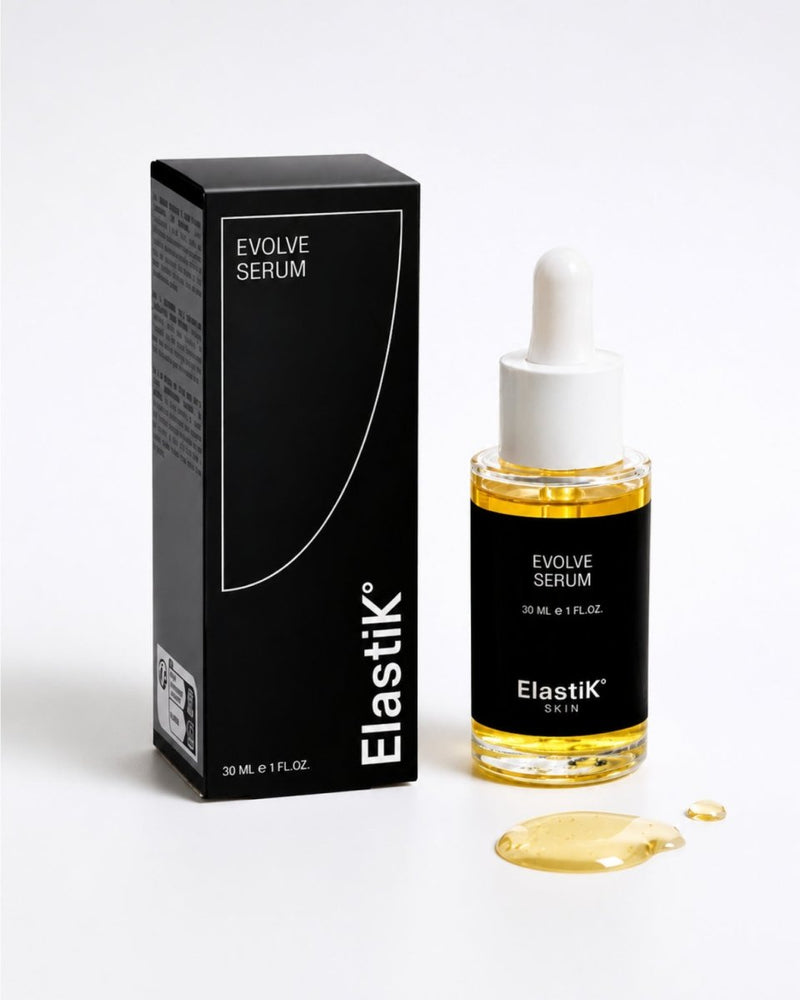
EVOLVE SERUM
Bakuchiol with rosehip, evening primrose and jojoba oils, for skin that looks dull, uneven or textured.
When skin starts to sting, strong retinoids are often the first thing to pause. Bakuchiol is the gentler alternative to bring back in once skin settles. Start on two or three evenings a week and build up.

RESILIENCE MATRIX NIGHT CREAM
A rich cream with shea and cocoa butter and plant glycosphingolipids, the last thing on as you get into bed. For the face, neck and décolletage.
The NHS advice for dry, itchy skin is regular moisturising with a richer product at night.7,9 This is that step: a rich overnight cream that supports the barrier while you sleep.

RENAISSANCE INFUSION EYE PATCHES
Hydrogel patches with niacinamide, hyaluronic acid, glycerin, aloe and panthenol. On clean, dry skin under the eyes for 15 minutes. Seven pairs per box.
Difficulty sleeping is a common perimenopause symptom,2 and the under-eye area is often where tiredness shows first. A 15-minute hydrating patch is an easy extra when the area looks dry or tired.
If firmness is your main concern, Regenesis Complex, a peptide serum used before Evolve Serum, is the step to add next.
In our small pre-launch trial, 11 people used the routine for six weeks. All 11 said their skin felt more hydrated and 9 of 11 said it felt more comfortable. You can see the details on our evidence page.
07. FAQ
WHAT ARE THE FIRST SIGNS OF PERIMENOPAUSE?
A change to your periods is usually one of the first signs.2 Skin changes such as dryness, itch and sensitivity can appear around the same time.2,3
CAN PERIMENOPAUSE CAUSE DRY SKIN?
Yes. The NHS lists dry and itchy skin among perimenopause and menopause symptoms.2 Oestrogen helps skin hold water, so as levels fall, skin can feel drier.6
CAN PERIMENOPAUSE CAUSE ACNE?
It can. Changes in skin oils and the balance between oestrogen and androgens are linked to acne around menopause.3,4 If it persists, ask a pharmacist or your GP.
WHY DOES MY SKIN STING WHEN I APPLY PRODUCTS?
Increased sensitivity is a recognised change.3 Strip your routine back to a gentle cleanser, moisturiser and sunscreen, then reintroduce products one at a time.
DO I NEED A BLOOD TEST TO KNOW IF I AM PERIMENOPAUSAL?
If you are over 45 and otherwise healthy, NICE guidance is that perimenopause can usually be diagnosed from your symptoms without tests.5 Your GP will advise.
WILL HRT FIX MY SKIN?
HRT is prescribed for menopause symptoms, not as a skin treatment. Whether it is right for you is a decision to make with your GP.11
RELATED ARTICLES FROM THE SKIN JOURNAL
SOURCES
All sources checked in October 2026.
-
NHS. What are menopause and perimenopause? nhs.uk, page last reviewed 19 May 2026.
Read the source on the NHS website -
NHS. Symptoms of menopause and perimenopause. nhs.uk, page last reviewed 19 May 2026.
Read the source on the NHS website -
The Menopause Charity. Join the dots: A-Z symptoms list. themenopausecharity.org.
Read the source on The Menopause Charity website -
Kamp E, Ashraf M, Musbahi E, DeGiovanni C. Menopause, skin and common dermatoses. Part 2: skin disorders. Clinical and Experimental Dermatology, 2022;47(12):2117–2122.
Read the source on PubMed Central -
National Institute for Health and Care Excellence (NICE). Menopause: identification and management (NG23). Published 12 November 2015, last updated 7 November 2024.
Read the source on the NICE website -
DeGiovanni C. Managing Menopausal Skin: A Clinician's Review. EMJ Dermatology, 2025;13(1):90–94.
Read the source on EMJ -
NHS. Itchy skin. nhs.uk, page last reviewed 19 July 2023.
Read the source on the NHS website -
Roster K, Fleshner L, Karatas TB, et al. Menopause and Common Dermatoses: A Systematic Review. American Journal of Clinical Dermatology, 2026;27:67–84.
Read the source -
NHS. Emollients. nhs.uk, page last reviewed 24 October 2023.
Read the source on the NHS website -
NHS. Sunscreen and sun safety. nhs.uk, page last reviewed 24 March 2026.
Read the source on the NHS website -
NHS. Treatment for menopause and perimenopause. nhs.uk, page last reviewed 19 May 2026.
Read the source on the NHS website -
Mukherjee A, Ghaem-Maghami S, Syed AA; British Menopause Society. Use of incretin-based therapies in women using hormone replacement therapy (HRT). BMS Tool for Clinicians, April 2025.
Read the source on the British Menopause Society website
This article is general information, not medical advice. ElastiK° products are cosmetics and support the appearance of skin; they do not treat medical conditions.